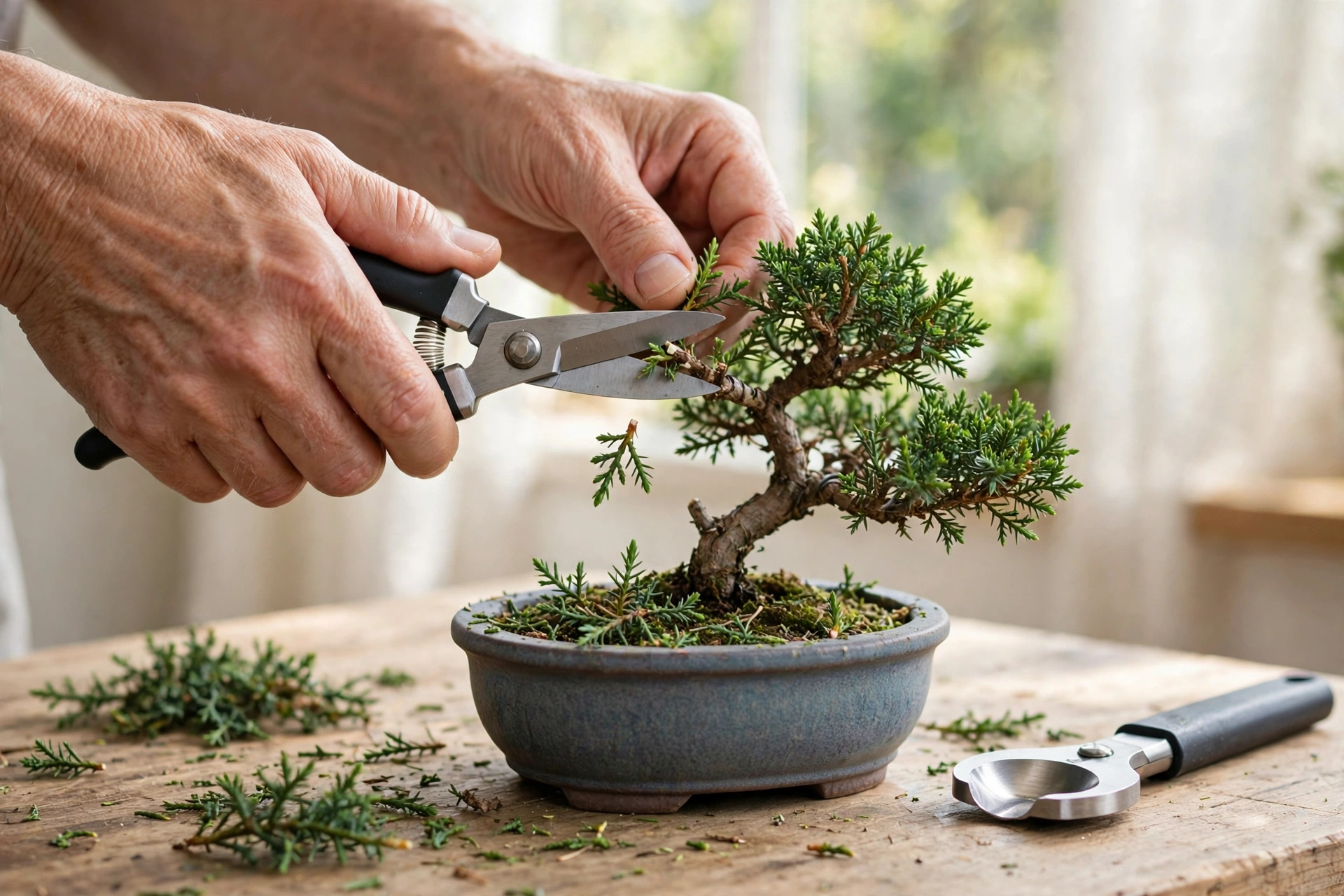
Learning how to prune a bonsai tree is one of the most important skills in bonsai care, and one of the easiest to get wrong. Pruning controls growth, keeps the shape clear, lets light reach the inner branches, and helps a tree stay healthy in a small pot. Done well, it guides a tree slowly toward a balanced design. Done hastily, it can remove branches the tree needs, weaken growth for a season, or leave wounds that take years to heal. Safe pruning starts with knowing what kind of pruning your tree needs, choosing the right time for its species, using clean, sharp tools, and making one considered cut at a time.
What Bonsai Pruning Actually Does
Pruning means removing part of a plant on purpose. In bonsai, it shortens shoots that have grown too long, removes branches that cross or crowd each other, and encourages new growth closer to the trunk. Without pruning, most bonsai would lose their shape and lower branches would weaken. A pruned tree has fewer leaves to support, so it can direct more energy into the shoots that remain. That can encourage back-budding, the growth of new buds on older wood, which helps build dense, fine branching, known as ramification. The same effect explains the risk: if too much foliage is removed at once, the tree may lack the leaves it needs to produce energy and recover.
Maintenance Pruning vs. Structural Pruning
The most useful distinction is between maintenance pruning and structural pruning. Maintenance pruning is regular, light work during the growing season: trimming new shoots back to one or two pairs of leaves, removing small unwanted shoots, and clearing growth that blocks light. It keeps a design, does not change it, and is the safest kind when done gently. Structural pruning is a bigger decision. It removes larger branches, shortens a trunk line, or changes the direction of the design, and its effects can last for years. It is usually done when the tree is dormant or at the start of the growing season. Because larger cuts remove more foliage and create larger wounds, it carries more risk. A tree should be healthy and vigorous first, and only a small number of major branches should be removed in one session.
Why Species, Growth Stage, and Season Matter
No two bonsai species respond to pruning in the same way. A juniper stores energy in its foliage and can be weakened badly if too much green growth is removed at once. A pine grows around candles, the soft new shoots that extend in spring, and pruning at the wrong time can disrupt a whole year of growth. Growth stage matters too. A young tree being developed needs lighter pruning, and some long sacrifice branches — branches kept temporarily to thicken the trunk — may grow freely. A mature tree being refined needs more frequent pruning for fine branching. Many temperate species respond best to structural pruning in late winter or early spring. Tropical species such as ficus grow mainly in warm weather and should be pruned when active, not when cold or stressed.
Choosing the Right Bonsai Pruning Tools
Sharp, clean tools make clean cuts that heal faster. Dull tools crush stems, tear bark, and leave ragged wounds. For bonsai trimming, sharp bonsai shears are the main tool; they are smaller and more precise than garden shears. For larger branches, a concave cutter makes a slightly hollow cut that heals with a smaller scar. A knob cutter removes small stubs, and a small folding saw handles thicker branches. Before you start, clean your tools and disinfect them if you used them on another tree or suspect disease. After pruning, clean and dry them again. Choose the smallest tool that will make the cut cleanly; if a branch is too thick for your cutters, use a saw instead.
Reading Your Tree Before You Cut
The most important part of pruning happens before any cutting. Start by identifying the species, because species determines when to prune and how much foliage can safely be removed. If you are unsure, do not prune heavily until you have identified it. Next, check health: are the leaves a normal color, is new growth appearing, and are there signs of pests, disease, or dieback? A healthy, vigorous tree can handle pruning. A weak tree, a recently repotted tree, or one that has lost many leaves should be left alone until it recovers. Then study the structure. Choose the front, the angle that shows trunk movement and branch placement best. Notice branches that cross, grow straight up or down, or crowd the trunk. If the work is structural, mark branches to remove first. Set a limit for the session. You can always prune again later; you cannot reattach a branch.
How to Prune a Bonsai Tree Step by Step
- Set up a clear workspace. Place the tree on a stable table with good light. Keep tools and a container for cuttings within reach.
- Remove dead, damaged, and diseased growth first. Cut dead twigs, broken branches, and diseased shoots back to healthy wood. Clean your tools afterward.
- Clear crossing and crowded branches. Keep only one of a crossing pair, usually the one with better placement, movement, or taper — the gradual narrowing of a branch from base to tip. Remove shoots that grow straight down, straight up, or toward the front, cutting close to the base.
- Shorten long shoots. For many broadleaf species, let a new shoot grow to several pairs of leaves, then cut it back to one or two pairs, just above a bud pointing where you want growth to go. For junipers, pinch small tips rather than cutting across scale-like foliage. For pines, candle work should follow species-specific guidance only.
- Make structural cuts carefully. Place a concave cutter close to the trunk or parent branch and cut in one clean motion, without removing the collar, the swollen ring at the base of a branch that helps the wound close. For a thick branch, cut partway from below first, then from above, so its weight does not tear bark. Remove only one or two major branches per session.
- Check the silhouette and balance. Rotate the tree and look from all sides. The outline should be clear and balanced, with space between branch layers and light reaching the interior. Make small adjustments, then stop.
- Clean up and observe. Collect cuttings, wipe tools, and return the tree to its usual place. Do not repot or wire heavily the same day unless planned. Water as usual, based on soil moisture, and watch for new growth or stress.
Aftercare: Helping Your Bonsai Recover After Pruning
A pruned tree needs steady conditions, not extra water or fertilizer. Keep it in its normal light, shelter it from strong wind for a few days if much foliage was removed, and water based on soil moisture. Do not fertilize right after heavy pruning; wait until you see new growth, then resume feeding, following the product label. Small cuts usually heal on their own; larger cuts may benefit from wound sealant, though practice varies by species. New buds are good signs, while wilting or dieback may mean the tree was pruned too heavily or while stressed.
When Not to Prune a Bonsai Tree
Do not prune heavily when a tree is weak, sick, or recovering from repotting, pest damage, or neglect; let it regain vigor first. Do not prune a tree just moved to a new home or climate until it has settled, or during extreme heat, a cold snap, or drought. Do not prune a flowering species just before it flowers if you want the blooms. For temperate trees, avoid major pruning in late autumn, when new growth would not harden before winter. For tropical trees, avoid heavy pruning in cold weather. Finally, do not prune because you feel you should: if there are no long shoots, crossing branches, or dead growth, the best session is the one you skip.
Common Mistakes in Bonsai Pruning
- Removing too much foliage at once. Prune in stages and leave more foliage than you think you need.
- Pruning a weak or stressed tree. Let a struggling tree recover first.
- Cutting without a plan. Study the tree, choose the front, and decide what each cut is for.
- Leaving long stubs. Cut close to the parent branch, but respect the branch collar.
- Using dull or dirty tools. They crush tissue and can spread disease.
- Pruning bonsai branches the same way for every species. Junipers, pines, maples, and ficus respond differently.
- Pruning at the wrong time. Heavy work in late autumn or extreme heat can harm a tree.
- Removing the wrong branch. When in doubt, leave it and look again in a few weeks.
- Chasing symmetry. A natural, slightly irregular tree usually looks better.
- Forgetting aftercare. Moving, overwatering, or fertilizing a freshly pruned tree can undo good pruning.
Frequently Asked Questions
How much of a bonsai tree can I prune at once?
For maintenance pruning, only small amounts of soft new growth are removed. For structural pruning, remove only one or two major branches in a session and keep enough foliage for recovery. If unsure, prune less.
When is the best time to prune a bonsai tree?
It depends on species and the type of pruning. Many temperate trees are structurally pruned in late winter or early spring and maintenance-pruned during the growing season. Tropical trees are usually pruned when actively growing in warm weather. There is no single best month.
Can I prune a bonsai tree with ordinary scissors?
Ordinary scissors can trim very soft shoots, but bonsai shears are sharper, smaller, and more precise, and a concave cutter makes cleaner cuts on larger branches. If you prune regularly, invest in both and keep them clean.
Should I seal pruning cuts on a bonsai?
Small cuts usually heal on their own. Larger cuts may benefit from a thin layer of wound sealant, though practice varies by species. A clean cut matters more than sealing.
Why is my bonsai not growing after pruning?
Slow regrowth can mean the tree was pruned too heavily, at the wrong time, or while weak. Give it stable care, avoid further pruning, and watch for new buds.
Is it okay to prune a bonsai in summer?
Light maintenance pruning in summer is normal for many species, since that is when new shoots grow. Heavy structural pruning in extreme heat is riskier, so wait for a milder period for major work.
Conclusion
Pruning a bonsai tree well is less about bold cuts and more about observation. Identify the species, check the health of the tree, and decide whether you need light maintenance pruning or larger structural work. Use sharp, clean tools, make one considered cut at a time, and leave enough foliage for the tree to recover. Prune in stages, not all at once: a tree pruned gently and allowed to respond will usually reward you with new buds, denser branching, and a clearer design. As a next step, read the guide on how to care for a bonsai tree for more bonsai pruning tips, and keep a note of when you pruned and how the tree responded.