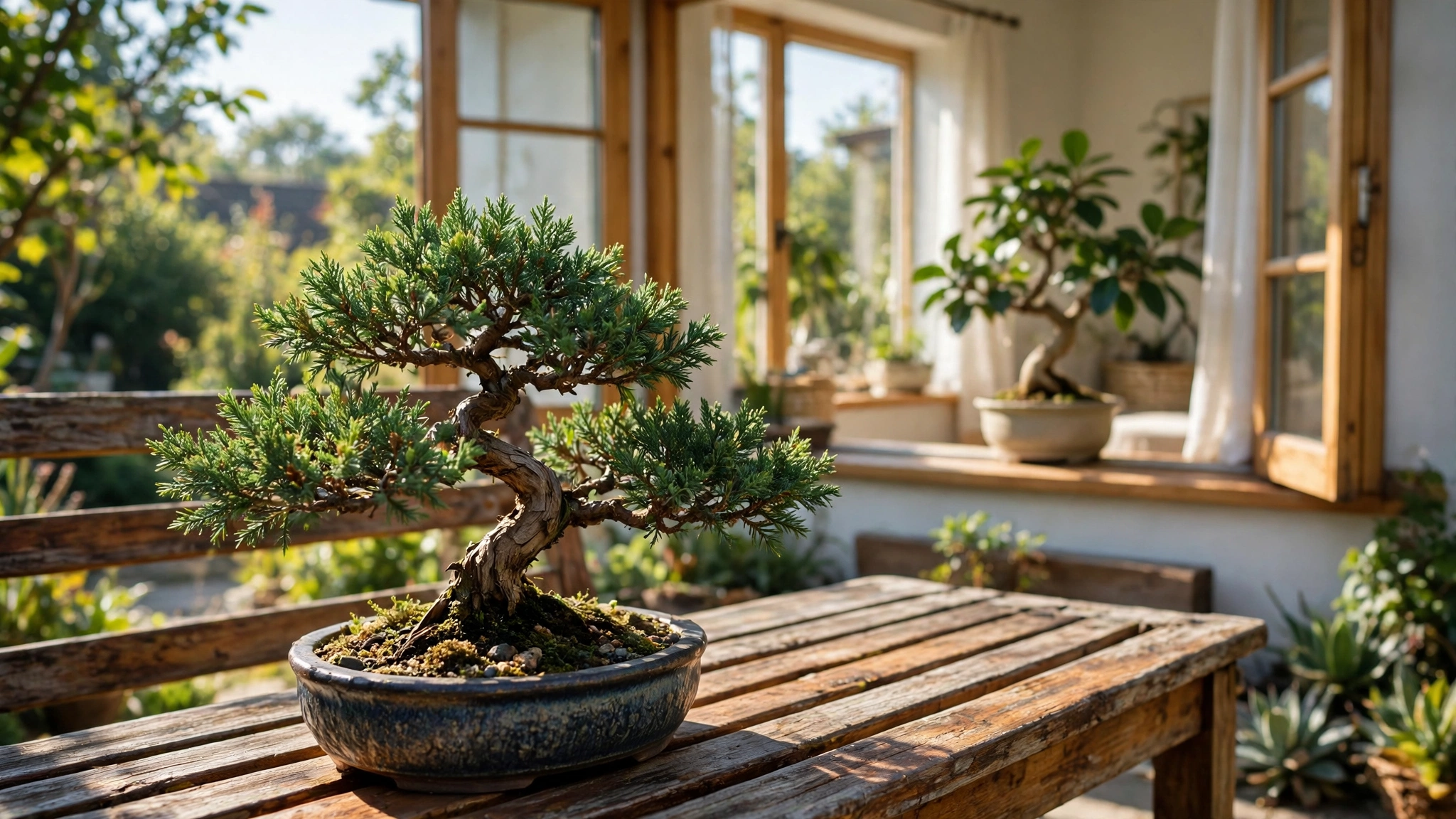
How much sunlight does a bonsai tree need? Most bonsai need several hours of bright light each day, but the exact amount depends on the species, whether the tree lives indoors or outdoors, the season, and your local climate. Most outdoor temperate bonsai do best with at least four to six hours of direct sun, while most indoor tropical bonsai need the brightest spot you can offer, usually near a sunny window or under a grow light. There is no single number that works for every tree.
Light powers photosynthesis, the process by which a tree turns light, water, and carbon dioxide into energy for growth. Without enough light, growth slows and leaves may drop. With too much harsh sun, leaves can scorch and shallow bonsai soil dries out quickly.
Why There Is No Single Answer
A bonsai is not a plant type. It is a tree grown in a container and trained over time. The same juniper that thrives in full sun on a balcony in a mild climate may struggle in the same spot during a heatwave, and a ficus that grows happily on a bright windowsill would weaken outdoors through a cold winter.
Light needs depend on species, climate, age and health, pot and soil, season, and location. Sun-loving species such as juniper, pine, and olive generally want as much direct sun as they can get, while some maples and azaleas prefer protection from strong afternoon sun. Bonsai pots are shallow, so soil heats and dries faster in strong sun. Before choosing a spot, identify the species if you can; it tells you far more about light needs than the word “bonsai” does.
Outdoor Temperate Bonsai vs. Indoor Tropical Bonsai
The most important distinction is between outdoor temperate bonsai and indoor tropical or subtropical bonsai. They are not interchangeable, and light is one of the main reasons why.
Most classic species — juniper, pine, Japanese maple, Chinese elm, azalea, and boxwood — are temperate trees that grow outdoors, experience winter dormancy, and need the seasons to stay healthy. They generally need direct sunlight for a good part of the day.
A common mistake is to keep a temperate bonsai indoors year-round because it looks attractive on a desk. Indoors, even a bright room is far dimmer than outdoors, and the tree misses the seasonal cues it needs. Growth becomes weak and leggy, and the tree may slowly decline. It may tolerate a short stay indoors for display, but it should not live there permanently.
Species such as ficus, Fukien tea, jade, and bougainvillea come from warm climates and cannot survive frost. In cooler regions these are the trees most often grown indoors, at least through winter. They still need a great deal of light: “indoor bonsai” does not mean “low-light bonsai.”
Direct Sun, Partial Shade, and Shade
Full sun generally means at least six hours of direct sunlight a day, with the sun shining directly on the foliage rather than filtered through glass or a curtain. Junipers, pines, and olives typically thrive in full sun when healthy, well watered, and acclimated.
Partial sun or partial shade generally means three to six hours of direct sun, or longer periods of bright but filtered light. This suits many trees in hot climates and species that prefer some protection, such as Japanese maple. Morning sun with afternoon shade is often a good compromise.
Shade generally means little or no direct sun, though the spot may still be bright. Few bonsai thrive in deep shade; a tree there will usually grow slowly, with sparse foliage and long, weak shoots reaching toward the light.
Sunlight through a window is weaker than sunlight outdoors, and glass can create a hot spot that scorches leaves close to it. That is why an indoor tree on a sunny windowsill can still need a grow light in winter.
How Much Sunlight Common Bonsai Species Need
The table below gives a general starting point. Treat it as a guide, not a prescription.
| Species | Light preference | Notes |
|---|---|---|
| Juniper | Full sun outdoors | Keep outdoors; avoid indoors year-round |
| Pine | Full sun outdoors | Needs strong light and good airflow |
| Japanese maple | Morning sun, afternoon shade | Protect from afternoon sun |
| Chinese elm | Full sun to partial shade | Prefers bright light |
| Ficus | Bright light indoors | Needs the brightest spot available |
| Jade | Bright light, some direct sun | Needs strong light to stay compact |
| Azalea | Morning sun, afternoon shade | Protect from intense midday sun |
| Olive | Full sun outdoors | Needs strong light and warmth |
Seasonal Changes and Acclimation
In spring, trees come into active growth and can use more light. In summer, the sun is at its strongest, and some trees benefit from afternoon shade. In autumn, light weakens and deciduous trees prepare for dormancy. In winter, days are short, and indoor trees may receive far less light than they need.
Acclimation matters whenever light changes suddenly. A tree that has spent the winter indoors should not be moved straight into full summer sun. The leaves can scorch, even if the species normally loves sun. Instead, move it gradually over one to two weeks: start in a sheltered spot with morning sun, then increase the exposure a little at a time. The same applies in reverse; a tree moved from bright outdoor sun to a dim indoor corner will often drop leaves.
Indoor Placement: Windows and Grow Lights
In the Northern Hemisphere, a south-facing window generally receives the most direct sun. An east-facing window gives gentle morning sun; a west-facing window gives strong afternoon sun, which can overheat a tree close to the glass; and a north-facing window is often too dim for most bonsai without extra light. In the Southern Hemisphere, these directions are reversed. Observe the actual light in the spot over a full day.
Practical points for indoor bonsai light:
- Place the tree as close to the window as practical, without letting foliage press against hot glass.
- Rotate the tree a quarter turn every week or two so all sides receive light and growth stays balanced.
- Avoid a dark corner or a room lit only by ordinary ceiling lights. Standard room lighting is far weaker than sunlight.
- If natural light is limited, especially in winter, a grow light can help. Position it at the distance recommended by the manufacturer.
Signs of Too Much Sunlight
Too much sun usually shows up first in the leaves and the soil. Watch for leaf edges turning brown, pale, or papery on the side facing the sun; leaves curling, wilting, or dropping suddenly after a move into stronger sun; bleached patches on foliage; and soil drying out very quickly on a hot day.
If you see these signs, move the tree to a spot with morning sun and afternoon shade, or provide temporary shade, and let it recover before making further changes. Check the soil before watering, and avoid fertilizing a stressed tree until it shows signs of new, healthy growth.
Signs of Too Little Light
Too little light often develops slowly, which makes it easy to miss. Common signs include long, thin shoots with large gaps between leaves, often leaning toward the window; leaves that are larger and paler than normal; slow growth during the growing season; and a tree that looks sparse, with foliage only on the outer edges.
If you suspect low light, move the tree gradually to a brighter spot and give it time. New growth in better light should look more compact and healthy. Avoid moving a weak tree straight into harsh midday sun, and do not try to fix low light by overwatering or overfertilizing.
How to Adjust Your Bonsai’s Light
- Identify the species and whether it is a temperate outdoor tree or a tropical or subtropical one.
- Assess the current spot: how many hours of direct sun it receives, whether the sun is morning or afternoon sun, and whether anything blocks the light.
- Compare with what the species needs. If the spot is far dimmer or far harsher than the species prefers, plan a change.
- Move the tree gradually toward a brighter or more sheltered spot over one to two weeks.
- Watch the response over several weeks: new growth, leaf color, and overall vigor. A single day tells you little.
- Adjust watering as light changes. More sun usually means faster drying; less sun usually means slower drying. Always check the soil before watering.
Common Mistakes
- Treating all bonsai as indoor desk plants. Temperate species need to live outdoors for most of the year. A bonsai on a desk is often slowly weakening from lack of light and seasonal change.
- Moving a tree suddenly into full sun. Even a sun-loving species can scorch if it has been indoors or in shade. Acclimate gradually.
- Chasing light with constant moves. Moving a tree every few days stresses it. Make a considered change, then give the tree time to respond.
Frequently Asked Questions
How many hours of sunlight does a bonsai tree need each day?
Most outdoor bonsai do best with at least four to six hours of direct sun, and many sun-loving species prefer more. Most indoor tropical bonsai need the brightest spot available, often a sunny window or a grow light in winter.
Can a bonsai tree get too much sun?
Yes. Even sun-loving species can suffer if moved suddenly into intense sun, especially after time indoors. Signs include scorched leaf edges, wilting, and soil that dries out very quickly. Acclimate gradually and offer afternoon shade in very hot climates.
Can a bonsai tree live indoors with low light?
Most bonsai cannot thrive in low light. Indoor tropical species can live indoors, but they still need bright light, usually the brightest window available or a grow light.
Do bonsai trees need direct sunlight or indirect light?
It depends on the species. Many outdoor bonsai need direct sunlight for several hours a day, while some, such as Japanese maple, prefer morning sun with afternoon shade. Indoor tropical bonsai often do well in bright light that includes some direct sun through a window.
Should I move my bonsai outside in summer?
Many indoor tropical bonsai benefit from time outdoors in warm weather, once the risk of cold nights has passed. Move the tree gradually into brighter light over one to two weeks, and bring it back indoors before temperatures drop in autumn.
Conclusion
How much sunlight does a bonsai tree need? Enough bright light for its species, in the right setting, with room to adjust as the seasons change. Most outdoor temperate bonsai need several hours of direct sun each day, while indoor tropical bonsai need the brightest indoor spot you can provide. Neither group thrives in a dim corner.
Start by identifying your species, assess the light in your current spot honestly, and make changes gradually. Watch how your tree responds over weeks rather than days, and adjust watering as light changes.