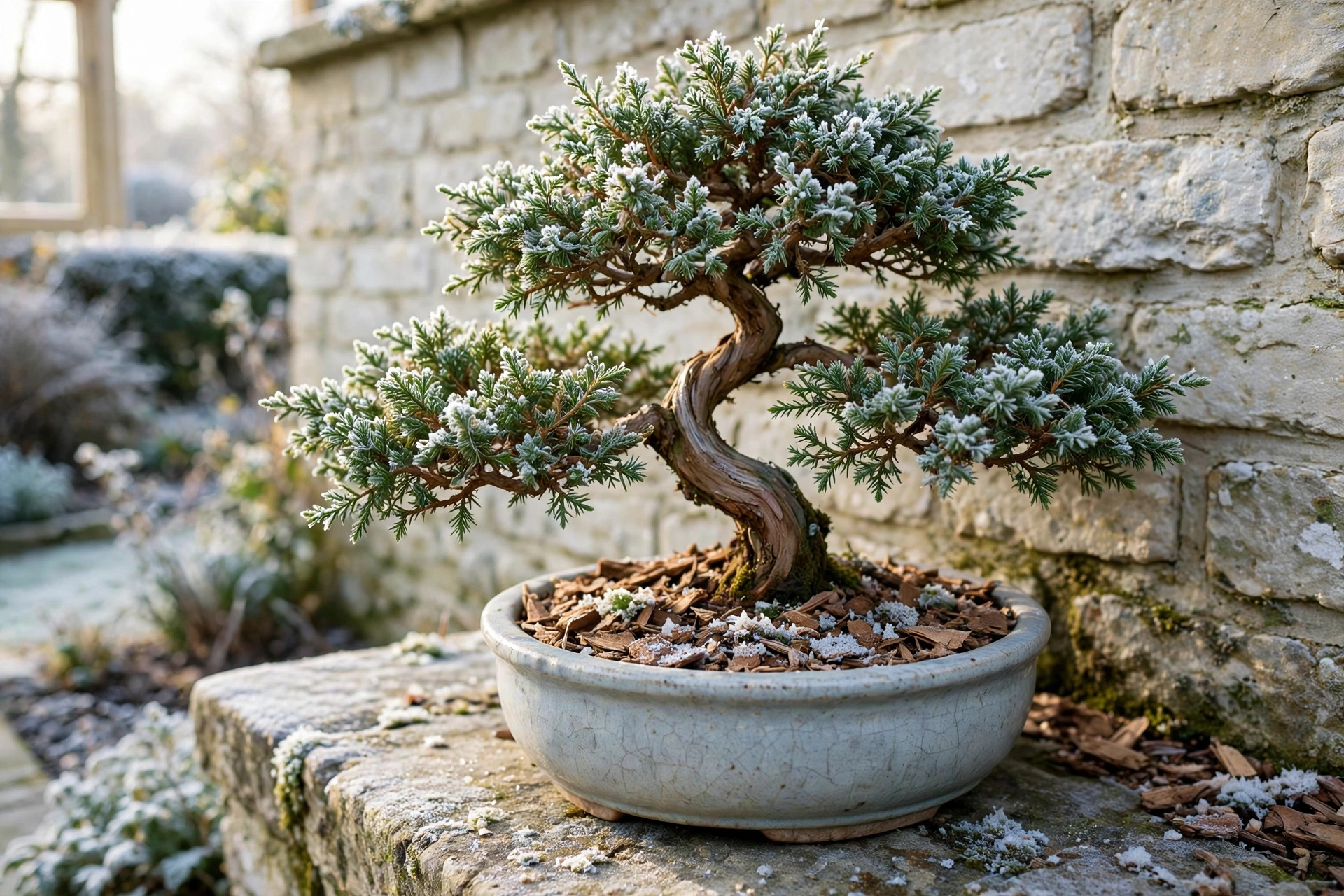
Learning how to protect a bonsai tree in winter starts with one fact: winter care is not the same for every bonsai. A hardy juniper that needs a cold rest is very different from a tropical ficus damaged by a light chill. The right approach depends on your species, local climate, pot size, and the health of the tree. This guide covers dormancy, frost risks, root protection, watering, and sheltered storage, so you can protect the tree in front of you rather than follow one rule that fits every situation.
Why Winter Is Risky for Bonsai
A bonsai grows in a very small volume of soil. In nature, a tree’s roots spread deep into the ground, where the soil insulates them from rapid temperature changes. In a shallow bonsai pot, that insulation is largely gone, and a freeze that a full-sized tree would barely notice can chill the pot right through.
Winter also brings drying wind and freeze-thaw cycles. Even a dormant tree loses some water through its bark and, for evergreens, through its needles or leaves. If the soil is frozen solid, the roots cannot replace it. For most temperate species, the goal is not to keep the tree warm, but to keep it cold enough to rest while protecting its roots from repeated freezing, drying, and sudden temperature swings.
Understanding Bonsai Dormancy
Dormancy is the natural resting period of temperate trees. As days shorten and temperatures fall in autumn, many deciduous and coniferous species slow their growth, stop producing new shoots, and prepare for winter. A deciduous bonsai, such as a Japanese maple, drops its leaves, while an evergreen, such as a juniper or pine, keeps its foliage but grows very little. This rest is normal and necessary, and a tree that does not get enough cold rest may leaf out weakly in spring.
That is why temperate bonsai should not be brought into a warm living room for the winter: a heated room interrupts dormancy, encourages untimely growth, and usually provides far too little light. Tropical and subtropical bonsai, such as ficus, Fukien tea, and serissa, do not go through a true cold dormancy. They may slow down when light levels fall, but they still need warmth, bright light, and regular care.
Hardy and Tropical Bonsai Need Different Winter Care
The most common winter mistake is treating all bonsai alike. Sort your trees into two broad groups: hardy temperate species and tender tropical or subtropical species. The groups overlap at the edges, and individual species vary, but the distinction is a good starting point.
Hardy temperate species include many junipers, pines, maples, and elms that naturally experience cold winters. They are generally grown outdoors year-round and need a period of cold to rest properly, so their main winter needs are root protection, shelter from harsh wind, and careful watering. They should not be moved into a heated room.
Tropical and subtropical species include ficus, Fukien tea, serissa, bougainvillea, and jade. These trees come from climates without freezing winters, and many are damaged by cold well before freezing point. Move them indoors or into a frost-free, brightly lit space before cold weather arrives. Some species sit between these groups: Chinese elm, for example, can be grown outdoors in milder climates or kept indoors in colder areas, so look up the hardiness of your exact species and consider the coldest conditions your area usually experiences.
Why Roots Need Extra Protection
The roots are the most vulnerable part of a bonsai in winter, and the part most people overlook. The branches and trunk of a hardy tree can tolerate cold that its roots cannot. In a shallow pot, the entire root mass can freeze, thaw, and freeze again as temperatures rise and fall, damaging fine roots and drying out the soil.
The risk is higher in a small or thin-walled pot, on a cold, exposed bench, or in a weak or recently repotted tree. Avoid major root work late in the growing season. Protecting the roots does not require complicated equipment: the aim of bonsai frost protection is to slow temperature changes around the pot and keep the roots from drying out in wind, using simple methods put in place before the coldest weather arrives.
How to Protect a Bonsai Tree in Winter: A Step-by-Step Plan
Use the following winterizing bonsai steps as a framework, and adjust the details to your species and climate.
1. Identify the species
Before the weather turns, confirm the species of each tree: is it a temperate species that needs outdoor dormancy, or a tropical species that needs indoor warmth? Group your trees by their winter needs.
2. Check each tree’s health
Inspect each tree in late autumn for pests, weak growth, damaged branches, or a cracked pot. Remove dead leaves and debris from the soil surface, and make sure drainage holes are not blocked. Do not do heavy pruning or repotting now unless the timing is appropriate for the species.
3. Choose a winter location
For outdoor bonsai winter care, choose a spot sheltered from strong wind but still outdoors: against a wall, under an overhang, in a cold frame, or in an unheated greenhouse. For tropical bonsai, choose the brightest indoor spot you can provide, such as a south-facing window in the Northern Hemisphere, away from radiators and cold draughts.
4. Protect the pots and roots
Set outdoor pots on the ground rather than on an exposed bench, where cold air circulates underneath. Group pots together so they shelter each other, and pack mulch, straw, or leaves around and between them. You can also bury the pot up to its rim in a sheltered spot, or place it inside a larger container filled with mulch. Make sure water can still drain freely.
5. Reduce wind exposure and handle snow carefully
Wind is often more damaging than cold alone, so a fence, wall, hedge, or windbreak can make a real difference. Avoid wrapping the foliage tightly in plastic, which traps moisture and encourages fungal problems. Light snow can help insulate a bonsai, but heavy, wet snow should be gently brushed off. Do not chip ice off frozen branches; let it melt naturally.
Watering Bonsai in Cold Weather
Watering is one of the trickiest parts of bonsai winter care. The tree needs far less water in winter than in summer, but it still needs some: a dormant tree that dries out completely can suffer root damage, and an evergreen that loses moisture through its foliage on a windy day needs water in the soil to replace it. Soil that stays wet and cold can also damage roots, especially if drainage is poor.
Check the soil regularly rather than watering on a fixed schedule. Push a finger or a wooden chopstick a short way into the soil: if the soil below the surface is still slightly damp, the tree probably does not need water yet. If the top layer is dry, water thoroughly on a mild day above freezing, in the morning so excess moisture has time to drain. Leafless deciduous trees use very little water while dormant, and tropical bonsai kept indoors still need watering through winter, but check the soil first and avoid letting them sit in water. Do not water when the soil is frozen solid, and do not fertilize dormant trees in winter.
Shelter Options for Outdoor Bonsai
There is no single best shelter for every climate. A cold frame is a low, box-like structure with a transparent lid that sits over the trees. It protects against wind and heavy rain while letting in light, and it keeps the trees cold enough for dormancy. Open the lid on mild days to prevent overheating and allow air circulation, and close it during hard freezes and storms.
An unheated greenhouse offers more space and protection, but it can warm up quickly on a sunny day and cool down sharply at night, so ventilate it on mild days. An unheated garage or shed can be useful in very cold climates, but it is often dark, so choose a room with a window and move the trees outside during milder spells. Visit the trees regularly to check the soil and look for pests.
Common Mistakes in Bonsai Winter Care
- Bringing temperate bonsai indoors. A warm living room interrupts dormancy and provides too little light.
- Leaving tropical bonsai outside too long. Bring them in before the first cold nights, not after damage appears.
- Watering on a fixed schedule. Check the soil before watering; needs vary with species, weather, pot size, and soil.
- Forgetting to water dormant trees. A resting tree still loses moisture, especially an evergreen in wind.
- Leaving pots exposed on a windy bench. Set pots on the ground and insulate them with mulch.
- Wrapping foliage tightly in plastic. This traps moisture, encourages fungal problems, and can overheat the tree.
- Heavy pruning or repotting late in the season. Major work leaves little time to recover before winter.
- Assuming one temperature threshold fits all species. Check your species and local climate instead.
Frequently Asked Questions
Should I bring my bonsai indoors for winter?
It depends on the species. Temperate bonsai such as juniper, pine, and maple generally need to stay outdoors for dormancy. Tropical bonsai such as ficus, Fukien tea, and serissa should be brought into a frost-free, bright space before cold weather arrives.
How do I keep bonsai roots from freezing?
Set the pot on the ground in a sheltered spot, group pots together, and insulate them with mulch, straw, or leaves. Burying the pot up to its rim or placing it inside a larger container filled with mulch also helps. Keep drainage free.
How often should I water a bonsai in winter?
There is no fixed schedule. Check the soil with a finger or a wooden chopstick, and water thoroughly on a mild day only when the top layer is dry. Do not water when the soil is frozen solid.
Can snow damage my bonsai?
Light snow usually helps by insulating the pot and soil. Heavy, wet snow can break branches, so gently brush it off before it builds up. Do not chip ice off frozen branches; let it melt naturally.
How do I know if my bonsai has been damaged by frost?
Look for signs in spring. Buds that fail to open, branches that are brittle and dry when scratched lightly, and foliage that turns brown and does not recover can all indicate cold damage. Some damage is limited to branch tips, which can be pruned back later.
Conclusion
Protecting a bonsai tree in winter is mostly about understanding what your tree needs and reducing the risks a small pot creates. Temperate species need cold rest outdoors, with roots insulated and sheltered from wind. Tropical species need warmth, bright light, and protection from cold well before freezing. Both need careful watering based on the soil, not the calendar, and gradual moves in autumn and spring. Before the cold arrives, identify your species, check each tree’s health, choose a sheltered location, insulate the pots, and check the soil regularly. A tree that spends winter protected, rested, and neither too dry nor too wet will grow strongly in spring.