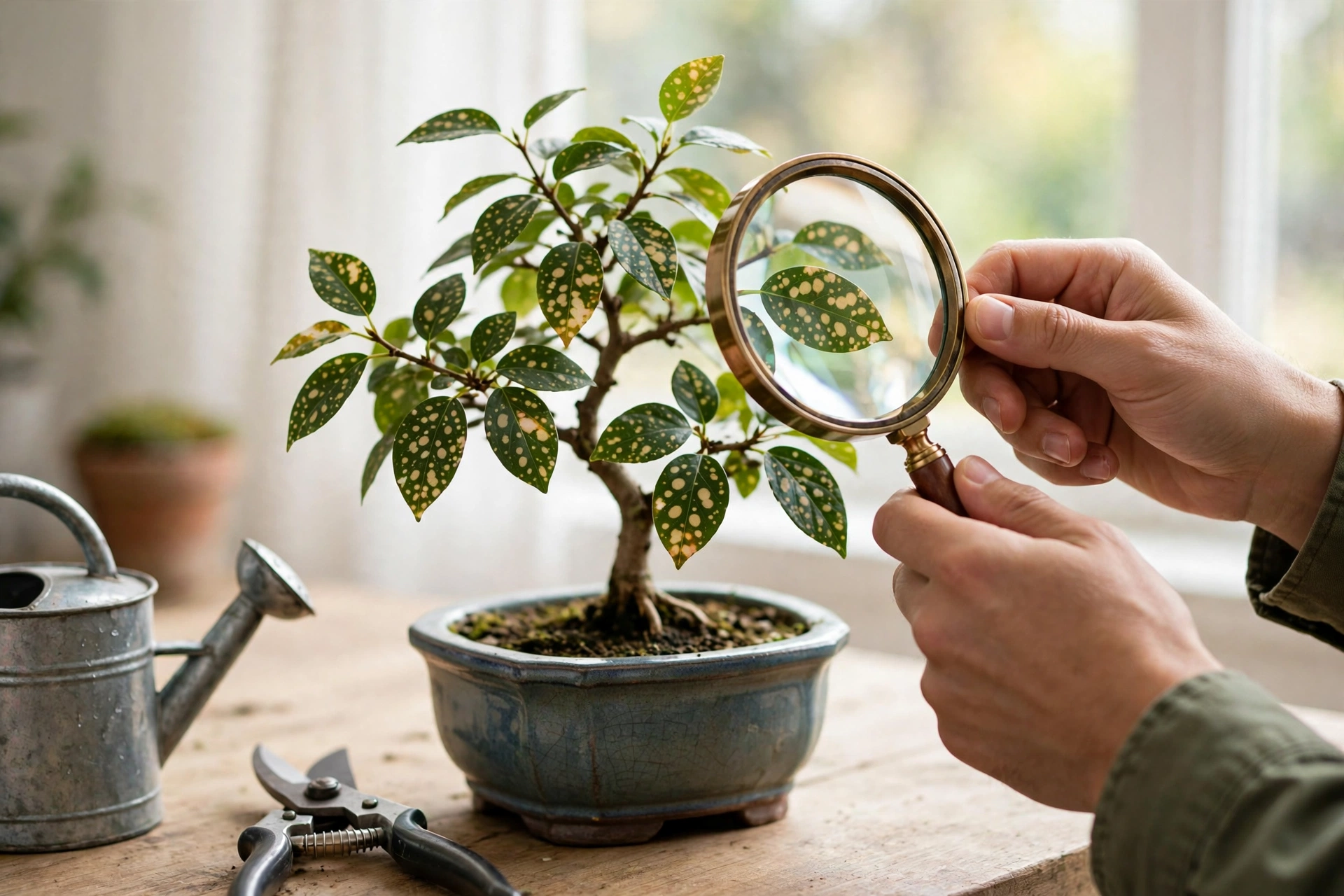
Bonsai tree diseases can turn a healthy miniature tree into a struggling one fast. A bonsai lives in a small pot with limited soil and a compact root system, so there is little buffer between a minor problem and a serious decline. Many bonsai disease symptoms are manageable when noticed early, and most problems can be prevented with good growing conditions, careful watering, and regular observation.
This guide explains the most common bonsai tree diseases, how to tell them apart from ordinary stress, and what to do when your tree looks sick. It will not diagnose your tree from a single symptom, because similar signs can have very different causes. Instead, it shows you how to inspect your tree and decide whether simple care changes are enough or you need a local plant-health specialist.
What Bonsai Tree Diseases Really Are
The term bonsai tree diseases covers several kinds of problems. Some are caused by fungi, bacteria, or other pathogens that infect leaves, stems, or roots. Others are not infections at all, but the result of poor drainage, overwatering, low light, cold damage, or a root system that has outgrown its pot. Both kinds can look alike, so careful diagnosis matters.
A bonsai is an ordinary tree kept small through container growing, pruning, and training, so its diseases are largely the same ones that affect the same species in the ground. Temperate species such as juniper, pine, and maple need outdoor conditions and a winter rest, while tropical species such as ficus need warmth and bright light. A stressed tree is far more vulnerable to infection than a vigorous one in suitable conditions.
Common Bonsai Disease Symptoms at a Glance
Different bonsai disease symptoms point in different directions, but no single symptom proves a diagnosis. Use this table as a starting point, then inspect the whole tree.
| Symptom | Possible Causes | What to Check First |
|---|---|---|
| Yellow leaves, then leaf drop | Overwatering, underwatering, poor drainage, nutrient problems | Soil moisture, drainage holes, watering pattern |
| Brown or black leaf spots | Fungal or bacterial leaf spot, sun scorch, cold damage | Whether spots spread, leaf wetness, weather |
| Soft, black, foul-smelling roots | Root rot from waterlogged soil | Drainage, pot size, watering frequency |
| White or grey powdery coating | Powdery mildew, a fungal problem | Airflow, humidity, crowded foliage |
| Branches dying back from tips | Root problems, drought, cold injury, fungal dieback | Roots, soil moisture, recent cold |
| Wilting despite wet soil | Root rot or severe root damage | Roots and drainage |
A sick bonsai often shows more than one sign at once. Root rot, for example, can cause yellowing leaves, wilting, and branch dieback together, so look at the roots, soil, and growing environment.
Bonsai Root Rot: The Most Serious Common Problem
Root rot is one of the most serious and most common bonsai tree diseases. It develops when roots sit in wet, airless soil for too long, because healthy roots need oxygen as well as water. Once roots rot, they cannot take up water properly, so the tree may wilt even though its soil feels wet. Early signs are easy to miss: growth slows, new leaves are smaller, and older leaves yellow and drop. Rotted roots are dark brown or black, soft, and sometimes foul-smelling, while healthy roots are firm and lighter. Do not pull the tree out repeatedly to check; reserve a root inspection for a tree that is clearly declining.
Prevention is far more effective than treatment. Use a free-draining soil mix suited to your species and climate, make sure the pot has drainage holes, and water only when the soil needs it, not on a fixed schedule. Check the soil with your finger or a chopstick first, then water thoroughly so the excess drains away. If root rot is suspected, stop the conditions that caused it: let the soil dry, improve drainage, and give the tree good light and airflow. Removing dead roots and repotting may help, but it stresses a weak tree, so ask a local specialist before major root work.
Fungal Leaf Spots and Other Leaf Problems
Bonsai fungal disease often shows up first on the leaves. Leaf spots may be brown, black, or yellow, sometimes with a darker edge or a yellow halo, and they may spread if conditions stay damp. Powdery mildew is a white or grey powdery coating on the upper surface of leaves that spreads in humid, poorly ventilated conditions. Wet leaves are a major risk factor: watering late in the day, splashing the foliage, or crowding trees together all encourage fungal problems.
When you see leaf spots, remove the worst-affected leaves and dispose of them away from your other trees. Improve airflow, avoid wetting the foliage, and make sure the tree gets the light its species needs. In mild cases that is enough. Bacterial spots can look similar to fungal ones, so do not reach for a chemical treatment based on a guess. If the problem keeps spreading, seek a diagnosis from a local extension service or plant-health specialist.
Dieback and Stress That Looks Like Disease
Dieback means branches, usually starting at the tips, begin to die and dry out. It is a symptom rather than a single disease, caused by root damage, drought, cold injury, or fungal infection. Check whether a branch is truly dead by scratching a small area of bark: living tissue is green and moist, dead tissue is dry and brown. If only a few twigs are affected, prune the dead wood back to healthy tissue. If dieback is spreading, look for the underlying cause and get help if you cannot find it.
Not every sick-looking bonsai has an infection: sun scorch, cold, low humidity, salt build-up, and recent repotting can all mimic disease, and deciduous species lose their leaves naturally in autumn.
How to Diagnose a Sick Bonsai Tree
Work through these steps before deciding on any treatment.
- Identify the species and check what is normal for it, including dormancy and seasonal colour change.
- Look at the whole tree. Note which parts are affected: old leaves or new growth, one branch or the whole tree.
- Check the leaves closely, including the undersides, for spots, coatings, insects, or sticky residue.
- Check the soil. Is it wet, dry, or soggy? Does water drain freely? Is there a sour smell?
- Review recent changes: moving, repotting, pruning, fertilising, or unusual heat or cold.
- Check the roots only if the tree is clearly declining, looking for firm, healthy roots versus soft, dark ones.
- Isolate the tree from your other bonsai while you work out the cause.
Write down what you find, including when the symptoms started and what has changed. That record helps if you later ask a specialist.
Prevention: The Best Defence Against Bonsai Diseases
Prevention is a set of habits that keep a bonsai vigorous. Remove fallen leaves from the soil surface, clean your tools before and after use, and keep new trees apart from your collection for a few weeks to check them for pests or disease. Space trees so air can move between them, because damp, still air favours fungal disease.
Water according to the soil and the tree, not the calendar, and buy healthy trees from reputable sources, inspecting them first for firm leaves, clean stems, and no signs of pests or spots.
What to Do When Your Bonsai Is Already Sick
If your bonsai already shows signs of disease, isolate it from your other bonsai straight away. Remove badly affected leaves or dead branches with clean tools, and dispose of the material away from your growing area. Correct the growing conditions: check drainage, watering, light, and airflow. Do not apply a fungicide, insecticide, or other chemical treatment as a first step. Many treatments work only against specific problems, some can damage a stressed tree, and some are restricted by local regulations. Identify the problem first, and follow the product label and local regulations exactly if a treatment is genuinely needed. If you are unsure, contact a local extension service, botanical garden, or plant-health specialist with clear photographs and notes on the species, soil, and recent care. Recovery takes weeks or months, so keep conditions steady and judge progress by new buds and growth.
Common Mistakes
- Treating every yellow leaf as a disease, when yellowing can come from watering, light, temperature, or seasonal change.
- Watering on a fixed schedule, regardless of soil moisture or season — a high risk for root rot.
- Using dense garden soil or a pot without drainage, which keeps roots wet and airless.
- Crowding trees together, which encourages fungal leaf problems.
- Pruning a weak or sick tree heavily.
- Reaching for chemicals before identifying the problem; the wrong product may harm the tree.
- Keeping a temperate outdoor species indoors year-round, where it weakens.
- Waiting too long to act: a few spotted leaves are a warning, while a tree with rotting roots is much harder to save.
Frequently Asked Questions
What causes black spots on bonsai leaves?
Black or brown spots can come from fungal or bacterial leaf spot, sun scorch, cold damage, or pests. Fungal spots often spread when leaves stay wet and air circulation is poor. Remove badly affected leaves, improve airflow, and get a diagnosis if it keeps spreading.
Can a bonsai recover from a disease?
Many bonsai can recover if the problem is caught early and the cause is corrected, but recovery is not guaranteed. A tree with mild leaf spots often produces healthy new growth once conditions improve, while a tree with extensive root rot may not recover. Judge progress by new buds and growth.
Should I use a fungicide on my bonsai?
Not as a first step. Fungicides only help against specific fungal problems and do not fix the conditions that caused the disease, such as poor drainage or wet foliage. Identify the problem first and improve conditions. If treatment seems necessary, follow the label exactly and local regulations, or ask a specialist first.
Why are my bonsai leaves turning yellow and falling off?
Yellowing and leaf drop have many causes: overwatering, underwatering, poor drainage, low light, cold, nutrient problems, root damage, and pests. Deciduous species also drop leaves naturally in autumn. Check soil moisture, drainage, and light, correct the most likely cause first, and watch for new growth.
When should I ask a specialist for help?
Ask for help when the problem keeps spreading despite better conditions, when many branches are dying back, when you suspect root rot in a valuable tree, or when you cannot identify the problem. Bring notes on the species, soil, and watering pattern.
Conclusion
Bonsai tree diseases are a normal part of growing bonsai. The trees that cope best are the ones grown in conditions suited to their species, with free-draining soil, careful watering, good airflow, and regular observation. Learning to spot the early signs — yellowing leaves, spots, wilting despite wet soil, or dieback — gives you time to act while the problem is still small. Inspect your trees this week, check their soil and drainage, and remove fallen leaves from the soil surface.