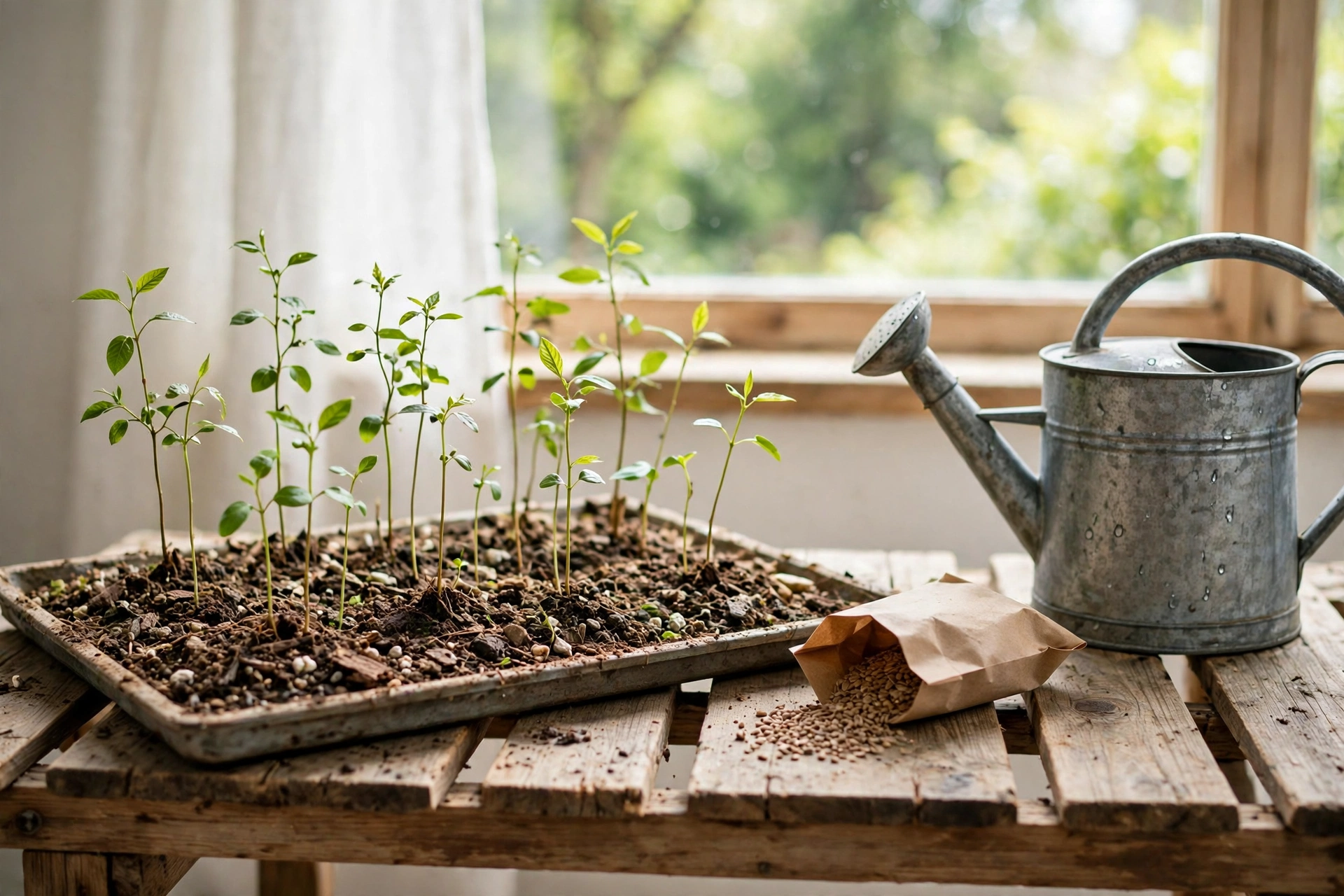
Learning how to grow a bonsai tree from seeds is one of the most rewarding ways to start in bonsai, and also one of the slowest. You begin with a small, hard seed and guide it, over years, into a tree with character. There is no shortcut to a mature-looking bonsai from seed.
This guide covers what bonsai seeds really are, how to choose a species, how to prepare and sow seeds, what germination looks like, and how to care for seedlings — plus an honest timeline.
What “Bonsai Seeds” Really Are
There is no special kind of seed that grows into a bonsai. Bonsai seeds are ordinary tree seeds. A Japanese maple seed or a pine seed is the same seed whether the tree is grown as a bonsai or planted in a garden. Bonsai is not a species or a genetic trait. It is a method of growing and training a tree — using a small container, pruning, careful watering, and shaping over time — to keep it small and give it the look of a mature tree in miniature.
So shop for seeds by species, not by the word “bonsai” on the packet. The seed does not do the miniaturising; that comes later, from years of care and training.
Choosing the Right Species
Species selection is the most important decision you will make, and it should come before you buy anything. It depends on your climate, outdoor space, and light.
Temperate species such as Japanese maple, pine, juniper, and elm generally need to live outdoors for most of the year. They need seasonal change, including a cold dormant period in winter, and usually struggle indoors. Tropical and subtropical species such as ficus can be kept indoors in many climates, but they need warmth, bright light, and protection from cold. Without outdoor space, a temperate species needing winter cold is a poor choice.
Also consider how the species grows. Some trees germinate readily and grow quickly at first; others are slow or need very specific conditions. As a beginner, choose a forgiving, vigorous species. Local bonsai clubs can advise on what grows well in your region.
Where to Get Bonsai Seeds
Buy seeds from a reputable source that names the exact species, ideally with its botanical name, and can tell you when the seeds were harvested. Fresh, named seed germinates best.
Specialist bonsai and tree-seed suppliers are often the most reliable, because they store seed properly and label it accurately. Collecting seeds yourself from a healthy tree in your area is also possible, and the parent tree is already proven to grow in your climate. If you collect your own, confirm the species and learn whether it needs special preparation before sowing. Avoid vague listings for mixed “bonsai seeds” with no species names — they may be unsuited to your climate or too old to sprout.
Understanding Stratification
Many tree seeds will not germinate simply because you put them in soil and water them. In nature, a seed that falls in autumn spends winter in cold, damp conditions before sprouting in spring. This cold period, called stratification, signals that winter has passed and it is safe to grow. Without it, they may sit for months or never sprout.
Stratification is not needed for every species. Tropical species generally do not need it; many temperate species do. Cold stratification usually means keeping seeds in a cool, moist environment for weeks or months, often in a refrigerator, mixed with damp sand. The exact length varies by species, so check guidance for your tree rather than following one number for all seeds. Keep them damp, not wet, with some air, and check for rot.
How to Grow a Bonsai Tree from Seeds: Sowing Step by Step
- Choose a container. A shallow seed tray or small pot with drainage holes works well. Clean the container before use.
- Prepare a free-draining sowing medium. Use a light, loose mix that holds some moisture but drains freely, such as fine sieved akadama or pumice. Avoid dense garden soil, which compacts and suffocates young roots.
- Fill and dampen the tray. Level the surface gently and water lightly so the mix is evenly damp before sowing.
- Sow at the right depth. As a general guide, sow a seed at a depth roughly equal to its own thickness, and cover very fine seeds with only a thin layer of mix. Seeds buried too deeply may not reach the surface; seeds left exposed may dry out.
- Label everything. Write the species, sowing date, and any treatment on a label and keep it with the tray. Labels matter most with more than one species.
- Provide light, warmth, and moisture. Place the tray in bright, indirect light with steady warmth suited to the species. Keep the medium consistently damp, not wet. Ventilate any cover regularly and remove it once seedlings emerge.
- Be patient. Check daily, but do not dig seeds up to see if they have sprouted.
Germination: What to Expect
Germination does not happen all at once, and it does not happen for every seed. Even with fresh seed and good conditions, some seeds will not sprout. That is normal.
When a seed germinates, a small root emerges first, followed by a shoot pushing upward. The first leaves, called cotyledons, often look nothing like the mature leaves of the species, The true leaves appear afterwards. Timing varies widely, so a tray that shows nothing for several weeks is not necessarily a failure.
Caring for Bonsai Seedlings
Once seedlings emerge, your job changes from encouraging germination to keeping young plants alive. Seedlings are far more vulnerable than established trees, so small mistakes can kill them.
Light. Seedlings need plenty of light to grow strong, but direct, intense sun can scorch tender young leaves. Bright, indirect light or gentle morning sun is a good starting point, with a gradual move toward stronger light as seedlings harden. Tall, pale, spindly growth usually means too little light.
Watering. Keep the medium evenly damp, because a tiny root system dries out quickly, but never waterlogged. Water gently, from the side or with a fine spray, so you do not flatten seedlings. Check daily and water when the surface begins to dry, rather than on a fixed timetable. Overwatering encourages damping off, a fungal problem that makes seedlings collapse at the stem base.
Airflow and feeding. Thin crowded seedlings, remove dead ones promptly, and ventilate any cover daily. Young seedlings do not need heavy feeding. Once they have a few sets of true leaves and are growing steadily, a very dilute, balanced fertiliser can help if the species and season make it appropriate. Too much fertiliser can burn delicate roots, so feed lightly and follow the product label.
Early Development: The First Few Years
The first year is about survival and building a foundation. Let the seedling grow. Resist the urge to prune, wire, or repot a tiny seedling into a bonsai pot — a seedling in a small pot will grow far more slowly than one given room to develop. Most growers keep seedlings in larger nursery pots, where they can build trunk thickness and strong roots.
Letting the seedling grow freely for a season or more usually produces a thicker trunk than keeping it constantly trimmed back. Wiring and heavy styling should wait until the tree is strong enough, usually after the first year or two at the earliest.
A Realistic Timeline for Bonsai from Seed
- Sowing to germination: weeks to months, depending on the species and whether stratification was needed.
- First year: the seedling establishes roots and produces its first true leaves. It is a fragile plant, not a bonsai.
- Years two to three: with good care and room to grow, the young tree thickens and gains height.
- Years three to five: the trunk shows some thickness and branch structure starts to develop.
- Five years and beyond: with consistent care, pruning, and training, the tree gradually takes on the character of a bonsai.
Growing from seed is therefore a long-term project; if you want a bonsai-looking tree this year, nursery stock is a faster route.
Common Mistakes When Growing Bonsai from Seed
- Buying unlabelled “bonsai seeds.” Without a species name, you cannot know what you are growing or whether it suits your climate.
- Skipping stratification. Temperate species that need a cold period will often fail to germinate without it.
- Giving up too early. Some seeds take months to germinate. Discarding a tray after a few quiet weeks can mean throwing away seeds about to sprout.
- Potting seedlings into a bonsai pot too soon. A tiny pot restricts root growth and slows trunk development.
- Pruning or wiring too early and too hard. Early years are for growing, not heavy styling.
- Expecting a miniature tree in one season. Bonsai from seed is measured in years, not weeks.
Frequently Asked Questions
How long does it take to grow a bonsai tree from seeds?
It depends on the species, climate, and care. Germination may take weeks or months, and the first year produces only a seedling. It usually takes several years of vigorous growth before a tree has enough trunk thickness and branch structure to begin looking like a bonsai.
Are bonsai seeds different from regular tree seeds?
No. Bonsai seeds are ordinary tree seeds. Bonsai is a way of growing and training a tree, not a type of seed. Buy named species only.
Do all bonsai seeds need stratification?
No. Stratification is needed mainly by temperate species whose seeds naturally spend winter in cold, damp conditions. Tropical and subtropical species generally do not need it.
Can I grow a bonsai tree from seed indoors?
It depends on the species. Tropical species such as ficus can often be grown indoors with enough warmth and bright light. Temperate species such as maple, pine, and juniper generally need to live outdoors
Why are my bonsai seeds not germinating?
Common reasons are missing stratification, old or poorly stored seed, a medium that was too wet or too dry, seeds buried too deeply, or a species that is simply slow. Give slow species more time before deciding the seeds have failed.
When can I start shaping a bonsai grown from seed?
Light guidance can begin once the young tree is growing strongly, but heavy pruning and wiring should wait until the tree is vigorous.
Conclusion
Growing a bonsai tree from seeds is a slow, hands-on way to learn bonsai from the ground up. You choose the species, prepare the seeds, watch them germinate, and guide a seedling into a bonsai over years. It asks for patience, but the tree is entirely your own.
Start with a species that suits your climate, buy fresh, clearly labelled seed, find out whether it needs stratification, and give your seedlings steady light, water, and airflow. Let young trees grow strongly before styling them. Next, learn how to grow a bonsai tree from cuttings — a faster route to a young tree.