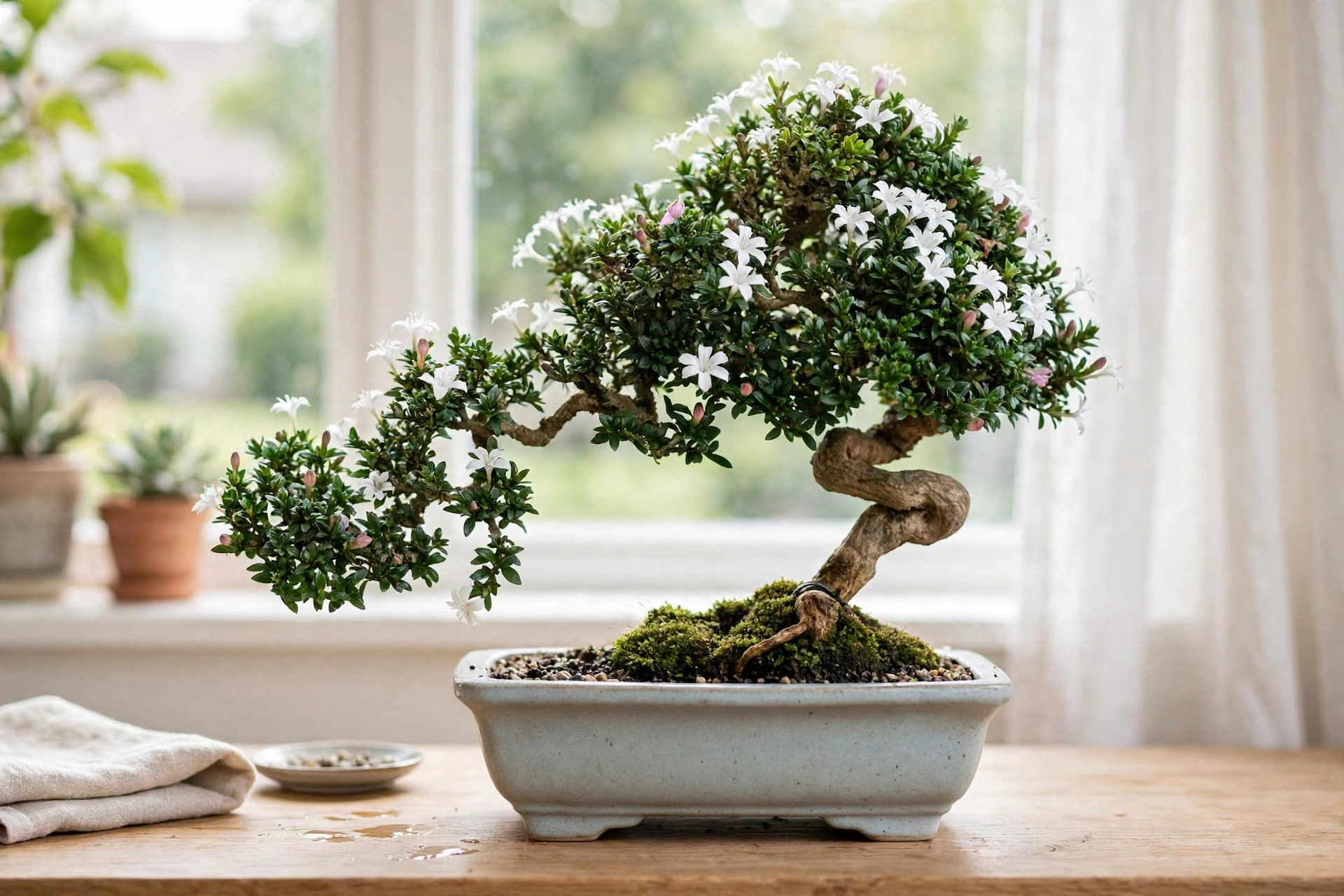
Serissa bonsai care rewards patience more than effort. The serissa, often sold as the tree of a thousand stars, is a small tropical evergreen that can cover itself in tiny white flowers — and drop its leaves after one sudden change. It wants warmth, steady moisture, bright light, and very little drama.
What Is a Serissa Bonsai Tree?
The serissa bonsai tree most people buy is a serissa foetida bonsai, also sold as Serissa japonica — a small shrub from warm parts of Asia, grown for its tiny glossy leaves, rough grey bark, and star-shaped white flowers. Its common name, tree of a thousand stars bonsai, comes from its many blooms.
A serissa is tropical, not temperate, and that explains most of its care. It needs no cold winter rest the way a juniper or a pine does, and it cannot tolerate frost. Treat it as a houseplant trained as a bonsai, not as a hardy outdoor tree.
Why Serissa Has a Reputation for Being Finicky
Serissa has earned a difficult reputation — but the difficulty is specific, not mysterious. The tree is sensitive to change: moving it, repotting it, letting the soil dry out once, or placing it near a cold draft can all trigger leaf drop. Leaf drop is usually a protest, not a death sentence; new leaves often appear within a few weeks once conditions settle.
Much of the reputation also comes from how the tree is sold: many arrive in small pots with dense soil, already stressed before facing yet another change of environment. Expect a few weeks of adjustment, with a little leaf loss, and resist changing things in response to every dropped leaf.
Serissa Bonsai Care: Light and Placement
Light comes first, because a serissa kept too dark will weaken, drop leaves, and stop flowering. Give it the brightest spot you can offer indoors — a south- or west-facing windowsill with several hours of direct sun suits it well, and an east-facing window is a reasonable alternative. With only a north-facing window, it will likely struggle unless you add a grow light.
Place the tree where it will stay, away from radiators, vents, and doors that open to cold air, since sudden temperature swings trigger leaf drop fast. To rotate for even growth, turn it a quarter turn every week or two.
In warm climates, a serissa can spend the warmer months outdoors in a sheltered, bright spot, protected from harsh midday sun. Move it outside gradually over a week, and bring it back indoors well before temperatures fall. In cooler regions, keep it indoors year-round.
Temperature and Stability
Serissa grows best in warm, stable temperatures, roughly normal indoor warmth. Keep it away from frost entirely — even brief cold exposure can damage it — and avoid cold windows or unheated rooms in winter.
Stability matters as much as warmth: once you find a spot where the tree grows well, leave it there. If you must move it, expect some leaf drop and give it a few weeks to settle — and never repot, fertilize heavily, or prune at the same time.
Serissa Bonsai Watering
Watering is where most serissa problems begin — and where most are solved. Aim for soil that stays evenly moist, never soggy, and never fully dry.
Check the soil with your finger or a chopstick every day or two; when the top layer feels slightly dry, water thoroughly until water runs from the drainage holes, then let the pot drain. Never let the pot sit in standing water, and never let the soil dry out so much that it pulls away from the pot’s edges — a serissa that dries out will often drop leaves within a day or two.
Do not water on a fixed schedule: how quickly soil dries depends on the pot, the mix, the light, the temperature, and the season, so the same tree may need water daily in a hot summer and only every few days in cool weather. Do not water a little every day either — shallow watering keeps the surface damp while roots below stay dry. If the soil has dried out completely, soak the pot in a shallow tray of water for ten minutes, then let it drain.
Humidity and Airflow
Serissa likes humidity higher than the dry air in many heated homes, especially in winter. Low humidity can brown leaf edges, cause leaf drop, and invite pests such as spider mites.
A humidity tray is the simplest fix: set the pot on a shallow tray of pebbles and water, keeping its base above the waterline. Grouping the serissa with other houseplants also raises humidity around it. Misting helps only briefly, and wet leaves in still air can encourage fungal problems. Good airflow matters too, but avoid direct cold drafts.
Soil, Repotting, and Feeding
Serissa needs soil that drains freely yet holds enough moisture for its fine roots. A standard bonsai mix of akadama, pumice, and lava rock works well, with a little pine bark for moisture retention. If your tree arrived in dense, heavy potting soil, be extra careful with watering until you can repot it into a freer-draining mix.
Repot young serissa every one to two years, and older trees every two to three years, in spring when growth is starting. Remove only part of the old soil and trim no more than about a third of the root mass, since serissa roots are fine and the tree dislikes heavy root work. After repotting, keep it in a sheltered, bright spot, water carefully, and hold off on fertilizer for several weeks until you see new growth. Some leaf drop after repotting is normal; do not prune or wire at the same time.
Feed during the growing season with a balanced liquid fertilizer diluted to half strength, every two to four weeks, and ease off in winter when growth slows. Do not fertilize a stressed, newly repotted, or leaf-dropping tree to revive it: fertilizer cannot fix a watering or placement problem, and it can damage struggling roots. Fix conditions first, then resume feeding.
Pruning and Shaping
Serissa responds well to pruning, and regular trimming keeps its canopy dense and its tiny leaves in proportion. During the growing season, cut long shoots back to one or two pairs of leaves, using sharp, clean scissors — torn stems heal slowly and invite disease.
Wiring is possible but needs care: branches are brittle and bark marks easily, so use the thinnest wire that holds and check it often. Many growers prefer clip-and-grow shaping — pruning to direct growth rather than wiring — because it suits the tree’s fast growth and reduces wire scars. Never prune and wire heavily at the same time as repotting.
Flowering: The Tree of a Thousand Stars
Flowering is the reward for getting the basics right. A healthy serissa can flower through much of the year, most heavily in the warmer months. Bright light, steady watering, and regular feeding all encourage flowers. If your tree is not flowering, the most common reasons are too little light, inconsistent watering, or a recent stress such as repotting — give it a few weeks of stable care before changing anything. Do not defoliate a serissa to force flowering or smaller leaves; on a sensitive tree like this one, it can cause serious setbacks.
Serissa Bonsai Problems: Leaf Drop and Recovery
Leaf drop is the most common serissa bonsai problem, and the most alarming for owners. Diagnose the cause before acting: common causes include a recent move, a sudden temperature change, dried-out soil, overwatering, low humidity, or repotting.
Check the soil first: if it is dry, water thoroughly; if it is soggy and smells sour, the roots may be waterlogged, so let the soil dry somewhat and improve drainage at the next repotting. Then check the placement: has the tree been moved recently, or is it near a draft or heat source?
Once the cause is fixed, a serissa usually pushes out new leaves within two to four weeks, though a badly stressed tree may take longer. During recovery, keep watering steady and conditions bright and stable, and do not fertilize, prune, or repot. Small green buds are a good sign even if the tree looks bare. Only dry, brittle branches with no buds after several weeks mean the tree is likely beyond recovery.
Pests and Diseases
A healthy serissa is fairly resistant to pests, but stressed trees attract trouble: aphids on soft new growth, spider mites in dry air causing fine webbing and speckled leaves, and scale as small bumps on stems and leaf joints. Check leaf undersides regularly, especially in winter.
If you find pests, identify them first, then remove what you can by hand or with a gentle spray of water. Wiping the leaves and isolating the tree often controls a light infestation. If you use any treatment, follow the product label exactly and follow local regulations, testing it on a small area first. A pest problem is usually a sign that something in the care routine needs attention, and fixing that matters as much as treating the pests.
Common Mistakes
- Moving the tree frequently.
- Letting the soil dry out, then flooding it.
- Watering on a fixed schedule instead of checking the soil.
- Keeping it in a dark corner and expecting flowers.
- Placing it near radiators, vents, or cold drafts.
- Repotting, pruning, and wiring all in the same week.
- Fertilizing a stressed tree to revive it.
FAQs
Why is my serissa bonsai dropping leaves?
Leaf drop usually follows a sudden change — a move, a temperature swing, dry soil, or repotting. Check the soil and placement, fix the cause, and keep conditions steady; new leaves usually appear within a few weeks.
Can a serissa bonsai live outdoors?
In warm climates it can spend the warmer months outdoors in a sheltered, bright spot, but it must come inside before cold weather — it cannot tolerate frost. In cooler regions keep it indoors year-round.
How often should I water my serissa bonsai?
No fixed schedule exists. Check the soil every day or two; water thoroughly when the top layer feels slightly dry — daily in hot, bright conditions, less often in cool weather.
Why is my serissa bonsai not flowering?
Usually too little light, inconsistent watering, or recent stress. Improve the light first, keep watering consistent, and give the tree a few weeks.
My serissa lost all its leaves. Is it dead?
Not necessarily. Scratch a small twig with your fingernail: green tissue underneath means it is alive. Keep it bright, warm, and stable, water carefully, and wait several weeks for new buds. Dry, brittle branches throughout mean it has likely died.
Conclusion
Serissa bonsai care comes down to stability. Give your tree of a thousand stars bright light, warm temperatures, soil that stays evenly moist, and a spot it can stay in, and it will reward you with dense foliage and clouds of tiny white flowers. When it drops leaves, treat it as a message, not a disaster: find what changed, fix it, and give the tree time to respond. Check its light and soil today, choose its permanent spot, and let it settle in.