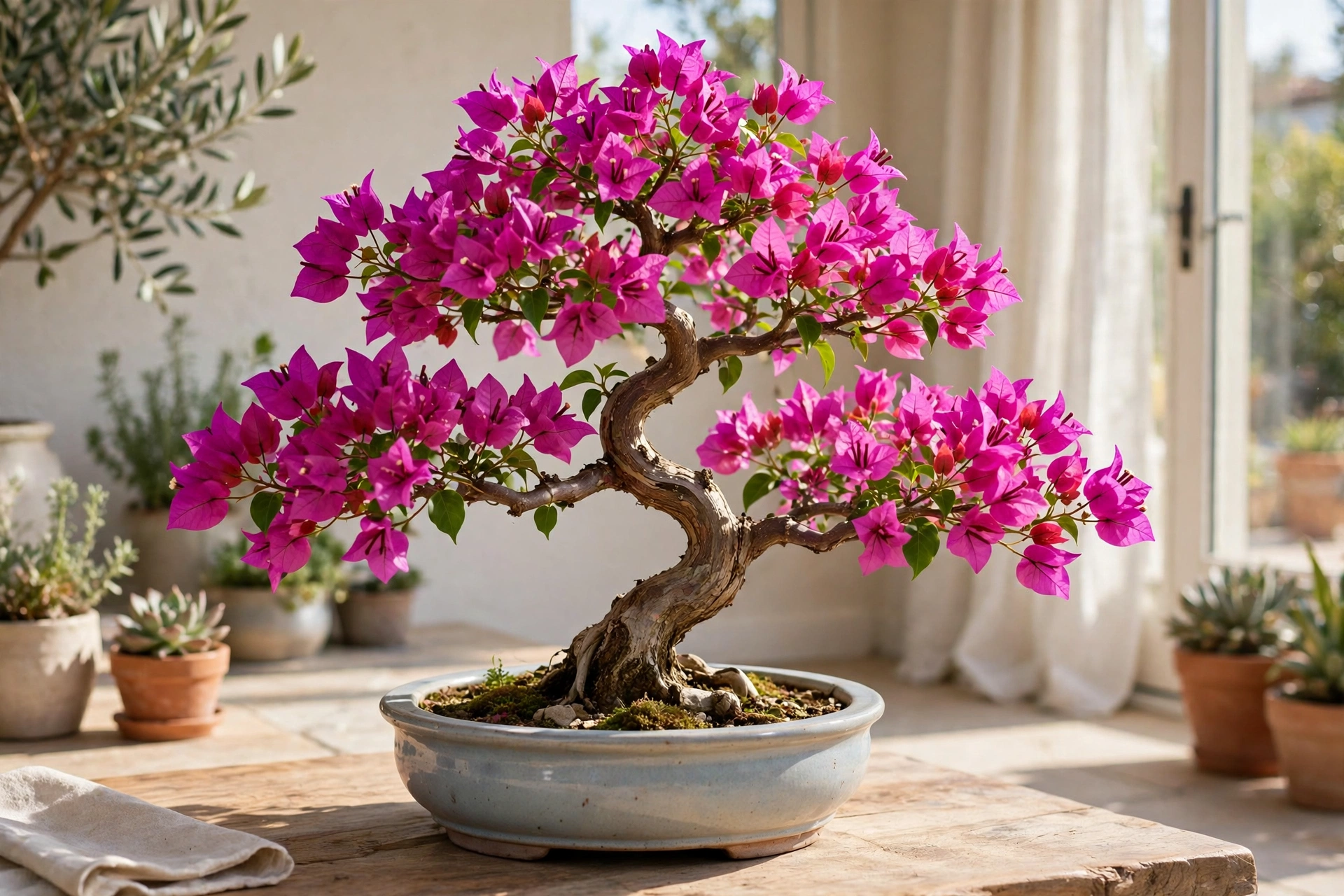
Good bougainvillea bonsai care comes down to three things: as much sun as you can give it, warmth, and watering that matches the season. Get those right and this tropical vine rewards you with masses of brightly colored bracts on a gnarled, characterful trunk.
A bougainvillea bonsai tree is not a temperate tree like a juniper or a maple. It comes from warm climates, has no true winter dormancy, and in most regions spends the warm months outdoors and the cold months in a bright, frost-free spot.
What Makes a Bougainvillea Bonsai Different
Bougainvillea is a vigorous woody vine in the wild, so as a bonsai it behaves differently from a slow-growing pine or elm. It grows fast in warm weather, throws out long, thorny shoots, and can flower repeatedly through the growing season. The trunk also thickens quickly, so a young plant can develop a convincingly aged-looking base in a few seasons.
The color you see is not the flower: the small, pale true flowers sit inside brightly colored bracts — magenta, purple, red, orange, pink, or white, depending on the variety. Bract production is tied to light, warmth, and mild stress, so an overfed, overwatered plant often produces leaves instead of color. Bougainvillea also has sharp thorns, brittle wood, and roots that dislike disturbance, so gloves and a gentle hand at repotting are part of the routine.
Sunlight and Warmth: The Two Non-Negotiables
If your bougainvillea bonsai is not flowering, sunlight is the first thing to check. Bougainvillea needs full sun — the brightest position you can offer — for most of the day. In warm climates that means an open, unshaded spot outdoors. A tree kept in partial shade will usually stay green and leafy but produce few bracts, if any.
Indoors, even a bright windowsill rarely matches outdoor sun. A bougainvillea bonsai indoor setup can keep the tree alive through a cold season, but it is a holding position, not an ideal one. Choose the sunniest window you have, ideally south-facing in the Northern Hemisphere, and keep the tree close to the glass. If the only available window is dim, consider a grow light, and move the tree back outdoors once frost danger has passed.
Warmth matters as much as light. Bougainvillea grows best in warm weather and slows sharply when temperatures drop. It is not frost-hardy: even a light frost can damage leaves and young shoots, while a hard freeze can kill branches or the whole tree. Watch local forecasts and bring the tree inside early. Good airflow also helps, since a stuffy corner encourages pests and fungal problems indoors.
Bougainvillea Bonsai Care: Watering
Bougainvillea bonsai watering is where beginners most often go wrong, usually by watering on a fixed schedule. Check the soil and water when it needs it — a tree in full sun in a small pot on a hot day dries out far faster than the same tree indoors in cool weather.
Check the top layer of soil with your finger or a chopstick. When the surface has dried but the soil below is still slightly damp, water thoroughly until it runs from the drainage holes, then let the pot drain completely. Never let the tree sit in standing water, which can rot the roots.
In the warm growing season, an outdoor bougainvillea may need water daily, or twice a day in very hot, windy weather. Indoors, or in cool weather, the same tree may need water only every few days. In winter, water less often but do not let the root ball dry out completely. A tree that is too dry wilts and drops leaves; one that is constantly soggy risks root rot.
Soil, Repotting, and Feeding
Bougainvillea needs soil that drains freely. A typical bonsai mix of akadama, pumice, and lava rock works well, with some growers adding a little pine bark. What matters most is that water passes through quickly and air can reach the roots — heavy garden soil is a poor choice in a shallow bonsai pot.
Repot in late spring or early summer, when the tree is entering its strongest growth, and only when the roots genuinely need it — for example, when water runs straight through without wetting the mix, or when roots are circling tightly. Bougainvillea roots are brittle, so remove only what is necessary and work gently, and avoid repotting at the same time as major branch pruning. After repotting, shelter the tree from harsh sun and wind for a week or two and water carefully while new roots establish.
Feeding supports flowering, but more is not always better. Use a balanced bonsai fertilizer during the growing season, following the product label. Too much nitrogen-rich fertilizer produces long, soft, leafy shoots at the expense of bracts, so if your tree grows vigorously but does not flower, feeding may be part of the problem — along with too little sun. Reduce feeding in autumn and stop in winter.
Bougainvillea Bonsai Pruning and Shaping
Bougainvillea bonsai pruning is a year-round habit, not a single annual event, because the plant grows fast and throws out long shoots. The basic rhythm is simple: let a shoot extend, then cut it back to a pair of leaves or a bud once it has grown past the shape you want. Regular pinching keeps the silhouette tight and encourages the fine branching that makes a bonsai look mature.
Follow these steps for a routine pruning session:
- Put on gloves and look at the tree from all sides before cutting anything.
- Remove dead, damaged, or crossing branches first.
- Shorten long, leggy shoots back to a leaf pair or an outward-facing bud.
- Cut just above the node, leaving no long stub.
- Step back and check the shape before making further cuts.
Structural pruning — removing a thick branch or changing the design — is best done in warm weather, when the tree is growing strongly and can heal quickly. Avoid heavy pruning in late autumn or winter, when the tree is slow to respond.
Wiring is possible but needs care: branches are brittle and snap easily, especially when thick or dry. Wire only young, flexible shoots, and check the wire often — fast growth means it can cut into bark within weeks. Many growers prefer clip-and-grow shaping and use wire sparingly; if a branch resists bending, prune it and grow a replacement.
Flowering: How to Get Bracts, Not Just Leaves
Bougainvillea bonsai flowering depends on the balance of sun, warmth, water, and feeding. A tree in full sun, kept warm, watered carefully rather than constantly, and not overloaded with nitrogen fertilizer is far more likely to produce bracts. A tree in shade, kept soggy, or fed heavily will usually stay green.
Flowering comes in flushes rather than continuously. After a flush fades, the spent bracts drop and the tree may push leafy growth before flowering again — this is normal. Pruning back finished shoots encourages new growth that can flower in turn, so deadheading and light trimming after a flush are part of the routine.
Cold Sensitivity and Winter Care
Cold is the biggest risk to a bougainvillea bonsai in most regions. The tree has no hardiness to rely on, so you are the protection. Before the cold season, move the tree indoors to the brightest, frost-free place available. A sunny windowsill, a heated greenhouse, or a bright conservatory all work if they stay above freezing and offer as much light as possible.
Indoors in winter, growth slows and the tree may drop some leaves — usually a response to lower light and the shock of the move, not a sign of serious trouble. Keep watering reduced but regular, stop heavy feeding, and avoid radiators and cold drafts. Do not move it outside on a mild day and forget it overnight — one cold night can undo a winter of careful keeping.
When spring arrives, move the tree outdoors gradually. Start with a sheltered spot and increase sun exposure over a week or two, so the leaves harden off instead of scorching — leaves grown indoors are softer, and sudden full sun can burn them. Once the tree is settled outside and nights are reliably warm, normal care resumes.
Pests and Diseases
Bougainvillea is generally tough, but not immune to problems. Common pests include aphids, mealybugs, scale, and caterpillars, which may appear on new growth or under leaves. Check the tree regularly, especially after bringing it indoors, and remove small infestations by hand or with a strong jet of water. For larger problems, identify the pest first and follow the label of any product you use, along with local regulations. Avoid spraying in hot sun, which can damage leaves.
Root rot is the most common disease, and it is almost always a watering or drainage problem. If the tree wilts despite wet soil, or leaves yellow and drop while the soil stays soggy, check the drainage and let the mix dry out. In severe cases, repot into fresh, free-draining soil, trimming away dead roots.
Common Mistakes
- Keeping the tree in shade and wondering why it never flowers.
- Watering on a rigid daily schedule instead of checking the soil.
- Leaving the tree outside into the first frost.
- Feeding heavily with nitrogen-rich fertilizer and getting leaves instead of bracts.
- Repotting and hard pruning at the same time, or repotting in winter.
- Forcing stiff branches with wire until they snap.
Frequently Asked Questions
How much sun does a bougainvillea bonsai need?
As much as you can give it. Full sun outdoors for most of the day is ideal, and it is the single biggest factor in flowering. A tree in partial shade will usually survive but produce few bracts.
Why is my bougainvillea bonsai not flowering?
The usual causes are too little sun, too much water, or too much nitrogen-rich fertilizer. Check the light first, let the soil dry a little more between waterings, and review your feeding. A recently repotted or moved tree may also skip a cycle while it settles.
Can a bougainvillea bonsai live indoors all year?
It can survive indoors with enough light and warmth, but it will rarely flower well or grow as strongly as an outdoor tree. In most climates the better pattern is outdoors in the warm months and indoors only while it is cold.
Why is my bougainvillea bonsai dropping leaves?
Leaf drop usually follows a sudden change: a move indoors or outdoors, a cold night, a missed watering, or repotting. It can also signal overwatering if the soil stays soggy. Stabilize the tree’s position and watering, remove dead leaves, and give it a few weeks to recover.
Conclusion
Bougainvillea bonsai care is straightforward once you accept what the tree is: a sun-loving tropical vine that wants warmth, bright light, and careful watering, with cold protection in winter. Give it the sunniest spot you have, water by checking the soil rather than the calendar, prune little and often, and bring it inside before the cold arrives.
Your next step is simple: check where your tree sits today. If it is in shade, move it toward the sun; if the nights are turning cold, plan its indoor spot now rather than waiting for a frost warning.