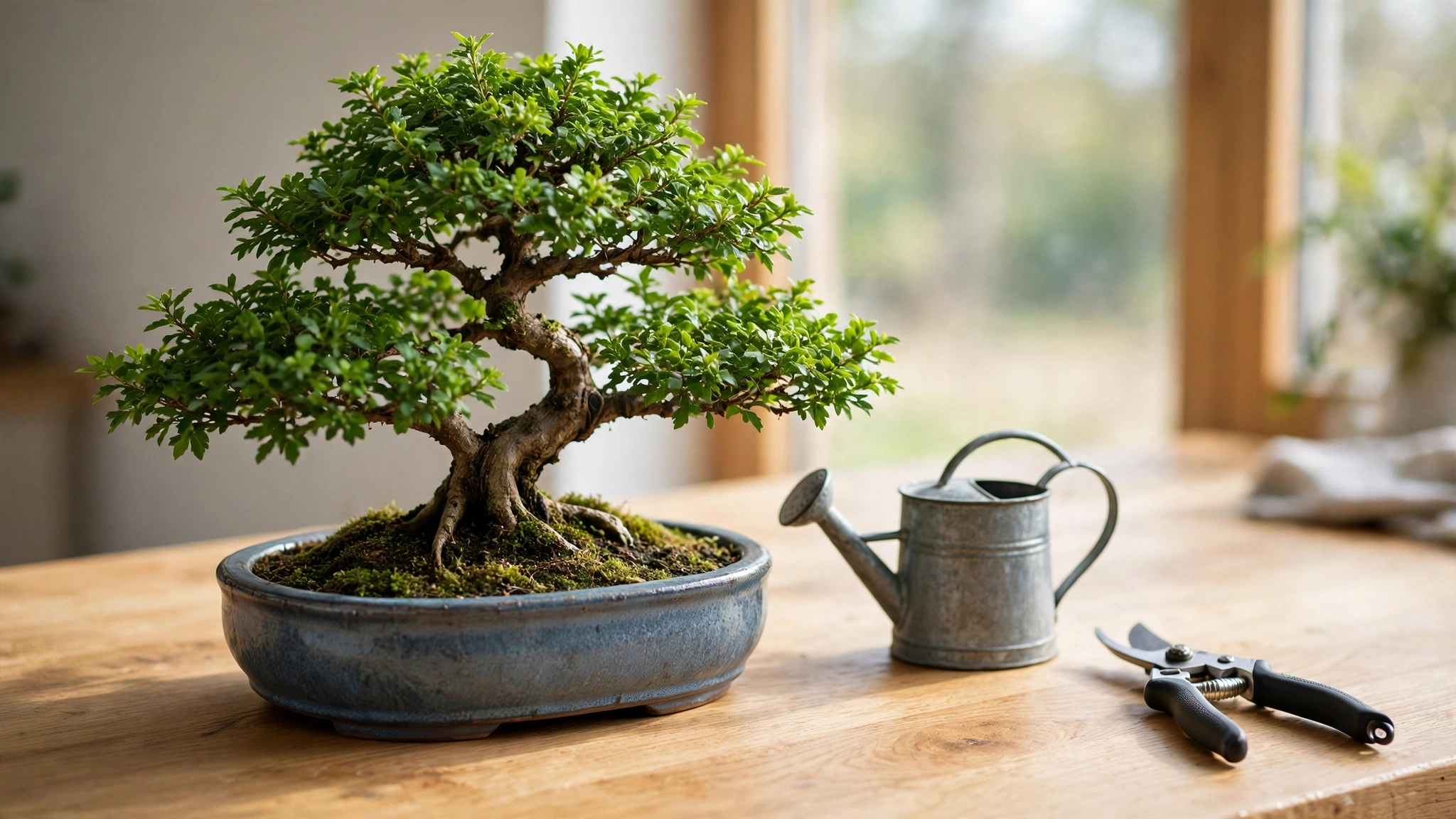
Learning how to care for a bonsai tree is less about memorizing a fixed schedule and more about learning to read your tree. A bonsai is a living tree in a small container, so it depends on you for water, light, food, and protection from extremes. Give it the right placement, check the soil before watering, feed it in the growing season, prune lightly, and watch it regularly. Most beginner problems come from treating every bonsai the same way. This guide covers that routine.
What Bonsai Care Actually Involves
A bonsai is not a houseplant or a miniature variety of tree. Bonsai is a method of growing and training an ordinary tree — a juniper, a maple, a ficus, or another species — in a shallow container so it stays small and develops the proportions of a mature tree. Because the pot holds only a small amount of soil, the tree has almost no buffer against mistakes. Daily bonsai tree care is a handful of jobs: suitable light and air, watering when the soil needs it, feeding during active growth, pruning to maintain shape, occasional repotting, and regular inspection so small problems are caught early.
How to Care for a Bonsai Tree Starts With Knowing Your Species
Before deciding where the tree lives, how often to water it, or when to prune, find out what species it is. Species identification is the first step in bonsai care for beginners because nearly every care decision depends on it. A juniper and a ficus may look equally small, but they come from different climates and need opposite treatment. Check the label, receipt, or listing from the shop, or ask the seller; if the label only says “bonsai,” compare the leaves, bark, and growth habit with a reliable species guide.
Indoor vs Outdoor: Where Should Your Bonsai Live?
The most common beginner mistake is keeping a bonsai indoors because it looks like a houseplant. Most bonsai species are outdoor trees. Temperate species — juniper, pine, maple, elm, and azalea among them — need to live outdoors for most or all of the year, with direct sunlight, fresh air, and a cold winter rest. Kept indoors year-round, they slowly weaken and often die over a season or two. Tropical and subtropical species are the exception: ficus, Fukien tea, serissa, bougainvillea, and jade cannot tolerate frost and are grown indoors in cooler climates, or outdoors only in warm weather. Find out whether your species is temperate or tropical, and place it accordingly.
Light: The Foundation of Bonsai Maintenance
Light drives almost everything a tree does. Without enough of it, a bonsai grows weak, leggy stems, sparse foliage, and pale leaves; with too much sudden, harsh sun — especially after a move from indoors — leaves can scorch. Most outdoor bonsai need several hours of direct sun daily, while indoor tropical species need the brightest spot available — usually a south- or west-facing window, or a grow light. Move a tree to a brighter position gradually, and rotate it occasionally so all sides receive light.
Watering: Check the Soil, Not the Calendar
Watering is where most bonsai are lost, and it is also where a fixed timetable causes the most harm. There is no reliable universal schedule: how quickly soil dries depends on species, soil mix, pot size, weather, season, sun, wind, and tree health. Test with a finger or wooden chopstick pushed a centimeter into the soil. If the top layer has begun to dry but the soil below is still slightly damp, most species are ready to water; succulents such as jade prefer to dry out more. Water thoroughly until water runs freely from the drainage holes, then let the pot drain completely. Wilting or crisp leaf edges can mean the tree has been left dry too long; yellowing leaves and persistently soggy soil can mean overwatering.
Humidity and Airflow
Outdoor trees usually get enough humidity and air circulation naturally. Indoor bonsai, especially tropical species, can suffer in dry, heated rooms in winter, when leaf tips may brown or leaves may drop. A humidity tray — a shallow tray of water and pebbles, with the pot sitting on the pebbles above the waterline — raises humidity slightly around the tree, but it is not a substitute for proper watering or light, and its effect is modest.
Soil: Why Bonsai Soil Is Different
Bonsai soil is not garden soil or ordinary potting mix. Bonsai grow in a loose, granular mix — often akadama, pumice, and lava rock, sometimes with a little organic matter — that drains quickly while holding enough moisture. Bonsai roots need both water and oxygen: dense soil stays wet and causes root rot, while a very coarse mix dries out too fast. The right mix depends on species and climate: moisture-loving trees such as azalea and maple need a more retentive mix, while pines and junipers prefer a freer-draining one. A ready-made bonsai soil from a reputable supplier is a reasonable start, but never use garden soil or heavy potting compost.
Feeding: Giving Your Bonsai the Nutrients It Needs
A tree in a small pot quickly uses up the nutrients in its soil, so feeding is part of routine bonsai maintenance. Fertilizer labels list nitrogen (N), phosphorus (P), and potassium (K): nitrogen supports leafy growth, phosphorus supports roots and flowering, and potassium supports overall vigor. Feed during the growing season, when the tree is actively growing, and reduce or stop feeding when growth slows in late autumn and winter. Follow the label exactly, and never feed a weak, sick, or newly repotted tree to revive it — fertilizer is not medicine. When in doubt, feed lightly and less often rather than heavily.
Pruning: Keeping Shape Without Weakening the Tree
Pruning is how a bonsai keeps its shape and size, and there are two kinds. Maintenance pruning is the regular removal of new shoots that grow out of the tree’s intended silhouette — a small, frequent job through the growing season. Structural pruning removes larger branches to change the design, and is done less often, at the right time of year for the species. For maintenance pruning, use clean, sharp bonsai scissors and cut back shoots that extend beyond the canopy outline to one or two pairs of leaves or buds. Never remove much foliage at once: a tree needs its leaves to make energy, and heavy pruning can set a weak tree back severely.
A Simple Beginner Routine
Bonsai care works best as a routine, not a series of emergencies:
- Daily in warm weather, every few days in cool weather: Check the soil, water thoroughly when needed, and glance at the leaves for anything new.
- Weekly: Turn the tree if growth is one-sided, remove dead leaves from the soil surface, and check the drainage holes are clear.
- Through the growing season: Prune new shoots that spoil the shape, feed modestly per the label, and watch for pests under the leaves.
- Seasonally: Adjust placement and protection as the weather changes, and plan repotting only when the tree shows it needs it, at the right time for the species.
Seasonal Care Through the Year
Bonsai care changes with the seasons, and following the tree’s natural cycle is easier than fighting it. In spring, most trees grow vigorously — the main season for feeding, light pruning, and, where needed, repotting. In summer, watering needs rise sharply, so check the soil more often. In autumn, growth slows, deciduous trees drop their leaves, and feeding should be reduced. In winter, temperate outdoor species need a cold rest, but their roots need protection from freezing in a shallow pot — a sheltered spot out of drying wind is often enough. Tropical species must be kept warm and bright indoors through winter and protected from cold drafts.
Monitoring Your Tree’s Health
The most valuable bonsai habit is looking closely at your tree. Look at the leaves, buds, bark, and soil surface each time you water. Sudden leaf drop, blackened tips, sticky residue, fine webbing, or white cottony patches are worth investigating. When something looks wrong, check the basics first: soil moisture, recent changes in placement or watering, pests under the leaves, and whether the season explains the change. Most problems are caused by water, light, or placement rather than disease. If you find pests, identify them first and follow product labels and local rules if you use any treatment.
Common Mistakes Beginners Should Avoid
- Watering on a fixed schedule instead of checking the soil — the most common cause of both underwatering and overwatering.
- Keeping an outdoor species indoors year-round, where it slowly weakens from low light and no winter rest.
- Using garden soil or dense potting mix, which drains poorly and suffocates roots in a shallow pot.
- Feeding a sick or newly repotted tree, or using more fertilizer than the label recommends.
- Ignoring the species — caring for the tree as if all bonsai were the same.
Frequently Asked Questions
How often should I water my bonsai tree?
Water when the soil has started to dry at finger depth, and water thoroughly until it drains from the bottom. In hot weather that may be daily; in cool weather it may be several days.
Can a bonsai tree live indoors?
Tropical and subtropical bonsai, such as ficus, can live indoors year-round in bright light. Temperate species such as juniper, pine, and maple cannot: they need outdoor conditions and a cold winter rest.
How do I know if my bonsai is getting enough light?
A tree getting enough light produces compact, firm new shoots and healthy-colored foliage. Long, pale, stretched shoots, sparse leaves, and weak growth usually mean it needs more light. Move it gradually to a brighter position.
How often should I repot my bonsai?
Most bonsai need repotting only every few years, when roots have filled the pot and drainage has worsened. Young, fast-growing trees may need it more often; the right season depends on the species.
Why are my bonsai’s leaves turning yellow?
It can be normal in autumn for deciduous species, or a sign of a watering, light, nutrient, root, or pest problem. Check the soil first, since both over- and underwatering cause yellowing.
Do bonsai trees need fertilizer?
Yes. A bonsai grows in a small volume of soil that quickly runs out of nutrients, so feeding during the growing season replaces what the tree uses. Use a balanced fertilizer at the label rate, and reduce feeding when growth slows. Never feed a weak or freshly repotted tree to revive it.
Conclusion
Good bonsai care is a habit, not a talent: identify your species, place it correctly, water by checking the soil, feed it while it grows, prune lightly, and look at it daily. Your next step: confirm your tree’s species and placement, then check its soil daily for a week to learn how quickly it dries.